
Is Squeezing Facial Pimples Dangerous? Things You Need to Know

Is squeezing facial acne dangerous? The answer is yes, especially when the pimple is located in the "Danger Triangle of the Face" extending from the bridge of the nose to the two corners of the mouth. This is an area with a venous network connecting directly to the intracranial cavernous sinus without valves to prevent backflow, meaning that self-squeezing can push bacteria into the cerebral circulation, causing cellulitis or cavernous sinus thrombosis. The article below helps you identify this anatomical region, distinguish inflammatory acne from boils (furuncles), and learn how to handle it safely.
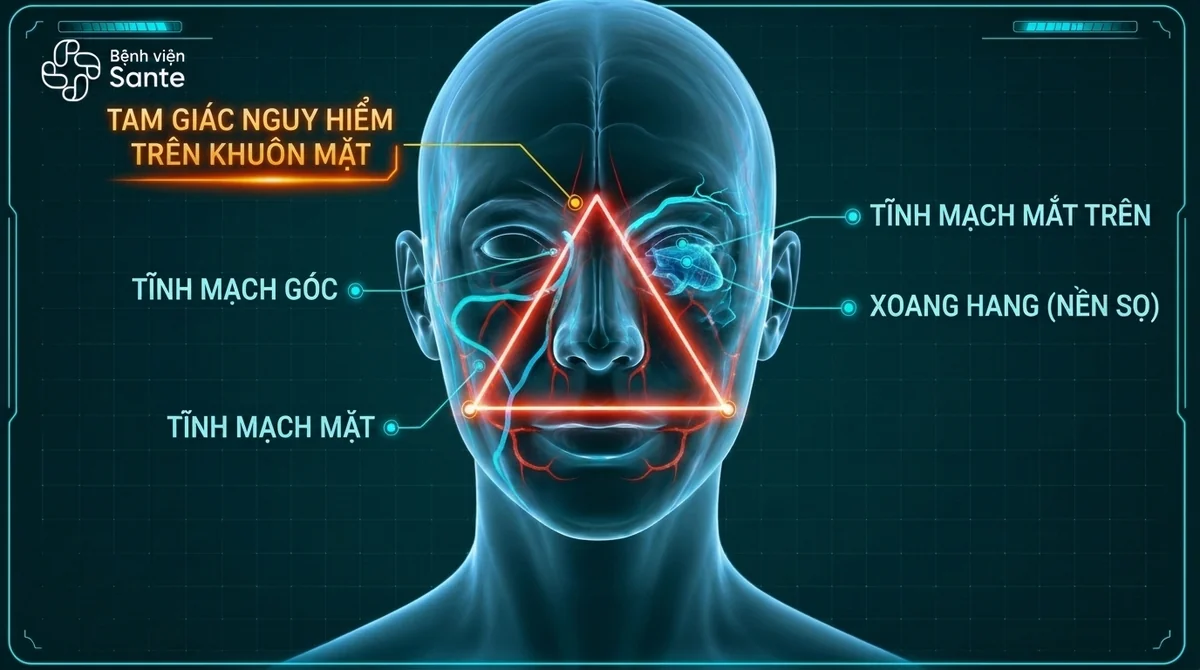
Where is the facial danger triangle located?
The facial danger triangle bounded by a triangle with the root of the nose between the two eyebrow arches as the apex, two sides running along the nasolabial folds down to the two corners of the mouth, and the base passing horizontally across the upper lip region. Because the density of sebaceous glands in this area is highly active, the nasal pyramid, alae of the nose, philtrum, and upper lip frequently develop acne, pustules, or boils.
In medical anatomy, the specific boundaries of this area include:
- Apex of the triangle: Located at the root of the nose (between the two eyebrows).
- Two lateral sides: Extending along both sides of the nasal bridge and the nasolabial folds (smile lines) down to the two corners of the mouth.
- Triangle base: It is a horizontal line connecting the two corners of the mouth, encompassing the entire upper lip region.
2. What signs may suggest widespread infection?
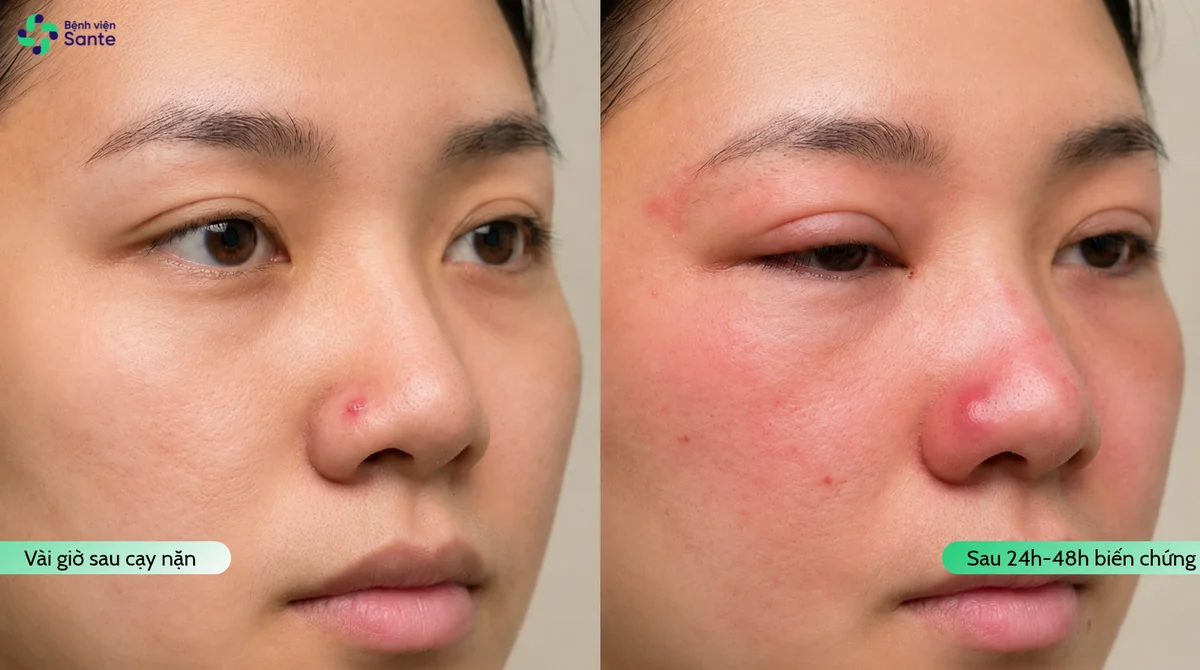
When bacteria invade deep into the soft tissues or follow the facial veins into the ophthalmic venous system and cavernous sinus, patients typically develop a rapidly progressing local inflammatory response accompanied by neuro-visual and systemic manifestations. Early recognition of these signals helps patients seek timely medical attention before the infection causes severe complications.
Warning signs that need close monitoring include:
- Swelling of the eye and eyelid area: One or both eyes begin to puff up, turn red, have injected conjunctiva, or present with exophthalmos.
- Severe headache accompanied by high fever: The pain is concentrated in the frontal region or behind the eye socket, which may be accompanied by high fever and chills.
- Ocular motility disorder (ophthalmoplegia): Numbness around the eyes, double vision (diplopia), blurred vision, or difficulty moving the eyes sideways.
- Systemic symptoms: Fatigue, nausea, lethargy, or altered mental status. These are warning signs requiring immediate medical emergency.
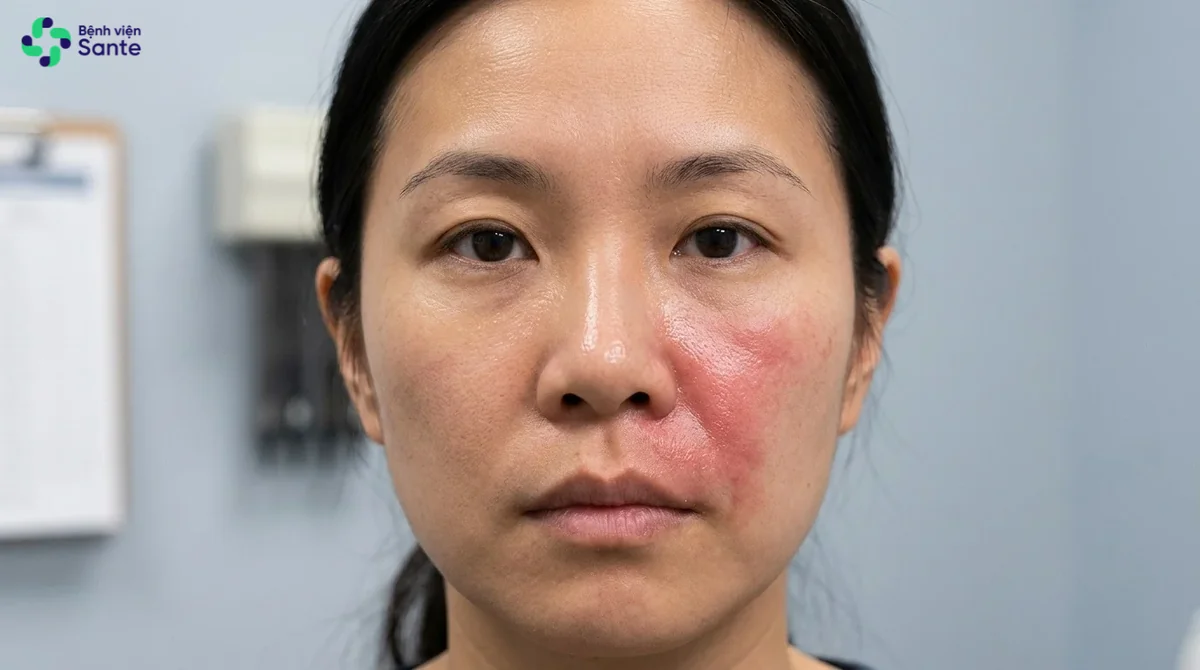
3. Differentiating Common Inflammatory Acne and Facial Furuncles (Boils)
Accurately distinguishing between common inflammatory acne and facial furuncles (boils) is essential for choosing a safe management approach. While inflammatory acne is usually caused by C. acnes bacteria and excess sebum with mild localized soreness, facial furuncles are typically associated with Staphylococcus aureus, causing rapid swelling, warmth, spreading throbbing pain, and a higher risk of systemic symptoms.
| Differentiating criteria | Common inflammatory acne | Facial boil (Furuncle) |
|---|---|---|
| Location of appearance | Scattered all over the face (forehead, cheeks, chin) | Usually localized to the philtrum, alar of the nose, corners of the mouth |
| Pathogenic agent | C. acnes bacteria, increased sebum secretion | Usually associated with Staphylococcus aureus invading hair follicles |
| Local sensation | Mild tightness, transient pain upon touch | Sharp, throbbing pain, potentially radiating |
| Degree of swelling | Localized redness around the pimple | Rapid swelling may occur, with tight, shiny, and red skin |
| Systemic signs | Usually no fever, normal health | May be accompanied by chills, fever, fatigue, swollen submandibular lymph nodes |
4. When to see a doctor soon?
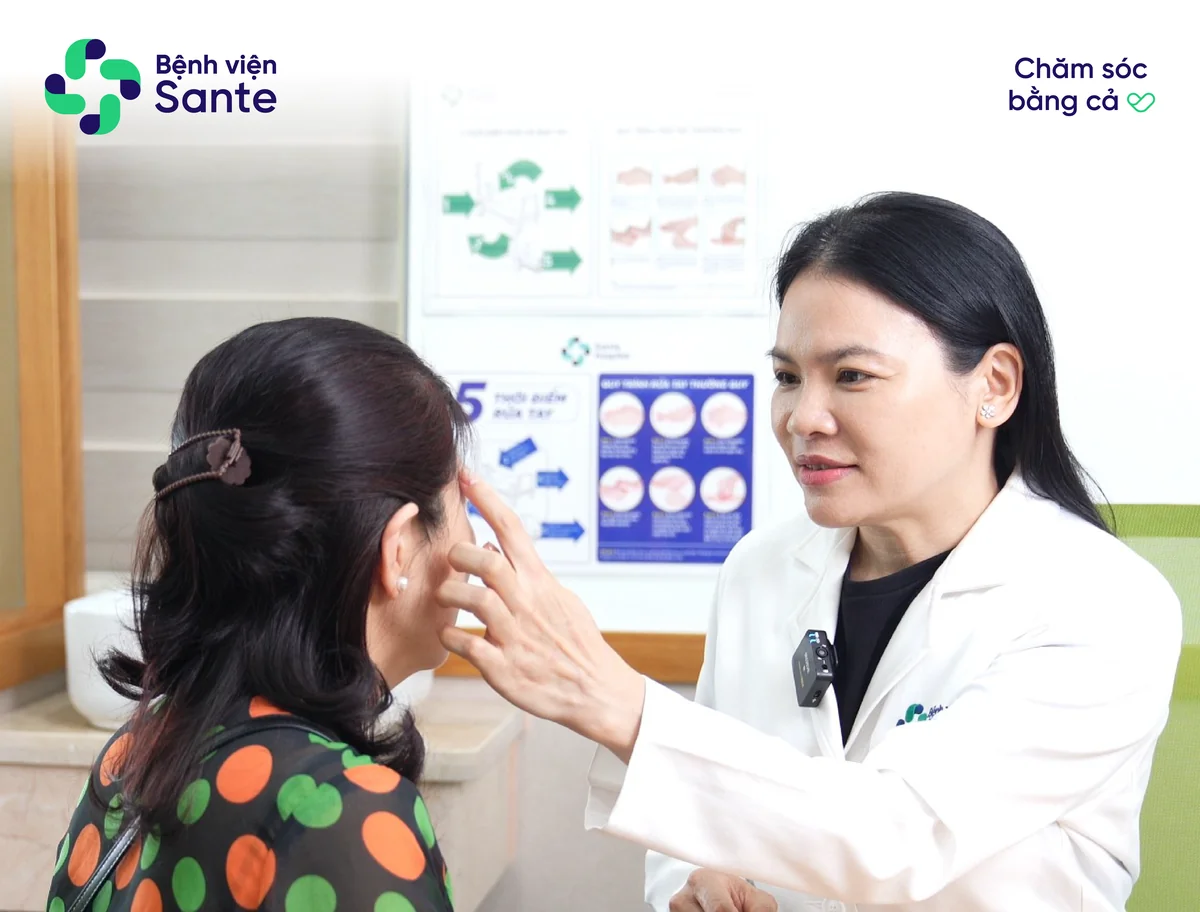
Patients should proactively visit the Dermatology department at Sante Hospital as soon as a pimple in the ala nasi or upper lip area swells rapidly, pain increases progressively after squeezing, or the red halo begins to spread to the cheek and eye socket areas. Early evaluation helps doctors control the inflammation site according to the correct regimen, limiting the risk of abscesses and widespread complications.
Go to a medical facility with a Dermatology department or a hospital immediately upon noticing:
- A pimple in the ala nasi or upper lip area rapidly swells after being squeezed.
- The surrounding red halo spreads to the cheek or toward the eye socket.
- Appearance of fever, chills, headache, or deep pain behind the eyes.
- Eyelids show signs of swelling, difficulty opening the eyes, or double vision.
5. Dos and don'ts when dealing with inflamed acne in the danger triangle of the face
The principle of safe management for inflamed acne in the danger triangle is to keep the skin surface clean, absolutely avoid mechanical manipulation that breaks the tissue protective barrier, and do not arbitrarily apply unverified medications or folk remedies. For persistent deep inflammatory acne cases such as nodulocystic acne, patients need to be prescribed an appropriate treatment direction by a doctor.
5.1. Things to strictly avoid
- Do not touch, feel, pick, squeeze, or pop with your hands: Applying strong force to an inflamed pimple can damage tissue and make the inflammation worse.
- Do not use sewing needles or sharp toothpicks to prick acne spots: Tools that are not guaranteed to be sterile can introduce more bacteria into the lesion area.
- Do not apply leaves or drawing plasters of unknown origin: Products that do not ensure hygiene can cause irritation and increase the risk of bacterial infection.
5.2. Initial management guidelines
- Gently clean the damaged skin area: Use clean water or normal saline to clean, avoid rubbing harshly.
- Gentle warm compress: You can use a clean gauze soaked in warm water and place it gently on the swollen area for about 5–10 minutes per time. Do not press or massage the pimple.
- Do not use medication arbitrarily: Antiseptic, topical, or specialized oral medications must be used according to the doctor's prescription and instructions.
- Medical examination when necessary: If the acne lesion is swollen, painful, pus-filled, or progresses abnormally, a dermatologist will evaluate and choose the appropriate management method.
Frequently Asked Questions (FAQ)
1. What should I do if the acne I squeezed in the dangerous triangle area of my face becomes swollen and painful?
You need to immediately stop all squeezing actions on the pimple. Gently clean the skin area with clean water or physiological saline, and avoid arbitrarily popping it or using topical or oral medications without a doctor's prescription. If the swollen area continues to spread, pain increases, or fever appears, go to a medical facility for a doctor's examination; especially if there is eye swelling, severe headache, or double vision, you need to go to the emergency room immediately.
2. Can accidentally squeezing a pimple at the corner of the mouth or smile lines cause blood infection?
Not all cases of popping pimples in this area lead to dangerous complications. However, popping pimples on your own can cause tissue damage and allow bacteria to enter. If after popping, the skin area is only slightly red and shows no other abnormal signs, you can gently clean it and monitor. In cases where there is increasing swelling and pain, spreading redness, or fever, you should visit a doctor early for an evaluation.
3. Can a furuncle heal on its own without needing to squeeze out pus?
Some cases of boils in the early stages can improve with proper care and treatment. However, if the lesion has already formed an abscess, the doctor may prescribe incision and drainage of pus depending on the actual condition. Patients should not arbitrarily squeeze or rupture boils at home because it can cause the infection to spread.
Conclusion
Understanding whether facial acne popping is dangerous helps you avoid the habit of picking at the nasal alae, philtrum, and upper lip areas. When furuncles or prolonged hot, swollen acne spots appear, seek early examination with a team of specialists — including specialists in Dermatology & Aesthetic Plastic Surgery at Sante Hospital — for proper evaluation and aseptic management.
Dermatology Specialist Consultation at Sante Hospital
If acne lesions in the nose-lip area are swollen and painful, showing signs of spreading or frequent recurrence, please schedule an in-person examination for specialist evaluation and safe management guidance.

