
Nodulocystic Acne:
When Is Isotretinoin Treatment Necessary?

Cystic acne is the most severe clinical form of acne vulgaris, characterized by deep inflammatory pockets in the dermis containing pus, causing destruction of granulation tissue and a high risk of tethered pitted scars. The prescription of oral Isotretinoin requires a strict examination process, periodic liver function and blood lipid tests, and absolute compliance with safe contraception guidelines from the Dermatology Specialists at Sante Hospital.
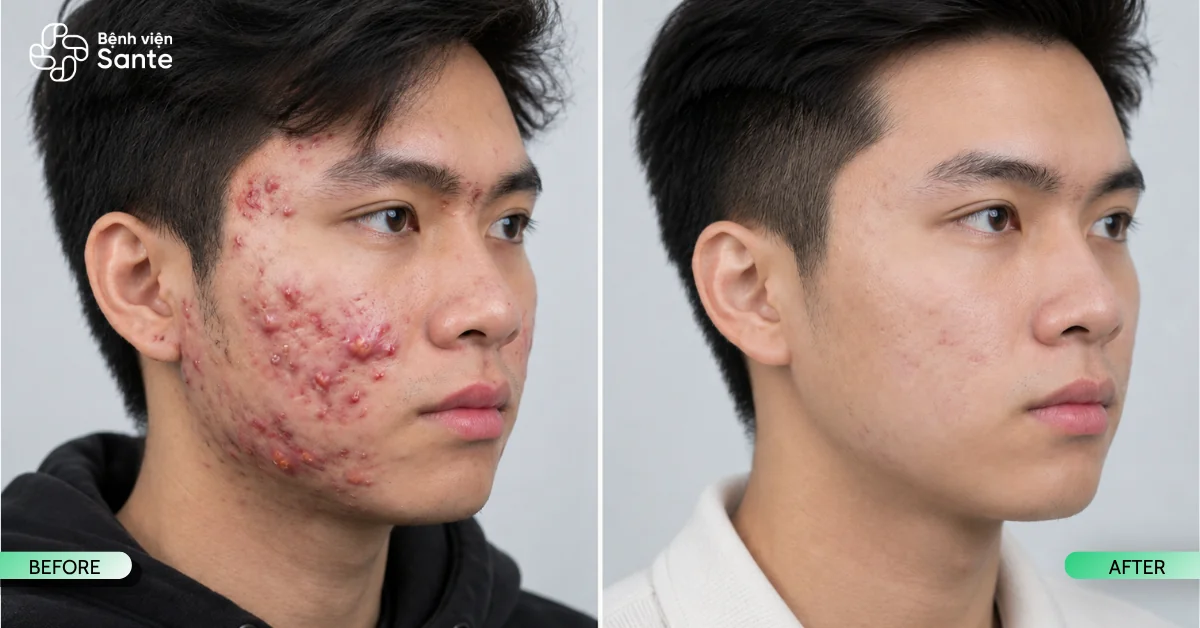
What are the characteristics of cystic acne?
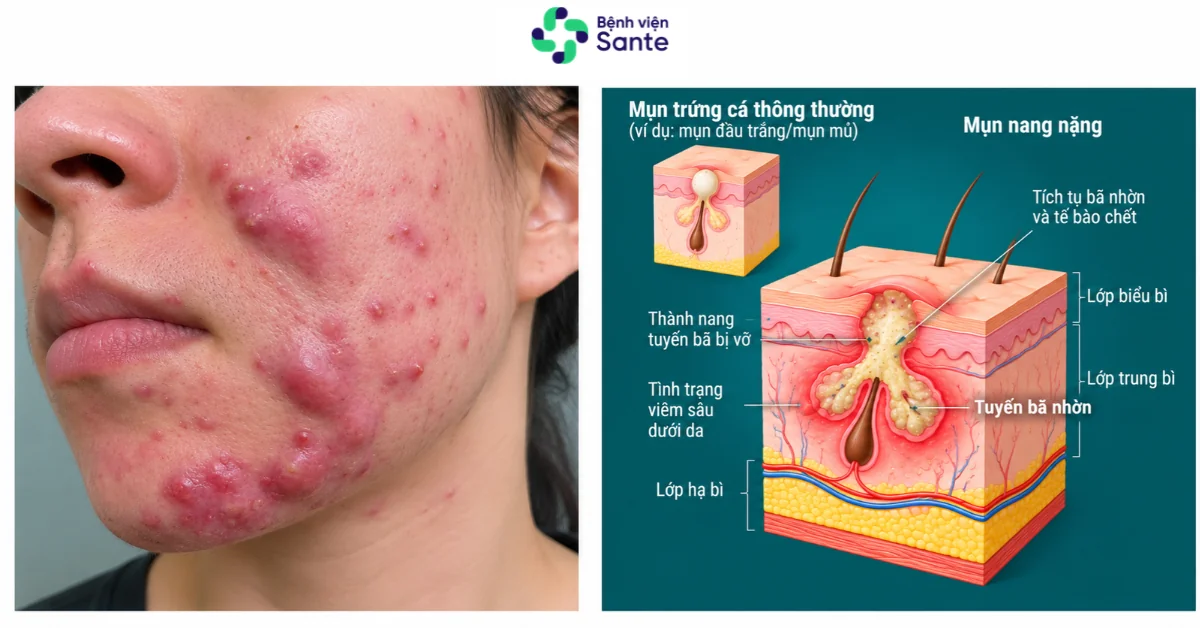
Cystic Acne It is a severe form of inflammatory acne classified as Grade 3 and Grade 4 according to international dermatology classification. Unlike superficial acne types on the skin surface, nodular and cystic lesions develop deep beneath the dermis and hypodermis, forming firm or fluctuating inflammatory masses containing pus that cause severe pain and destruction of skin tissue.
Specific clinical identification features of cystic acne include:
- Large size and prominent swelling: The pimple typically has a diameter of over 5mm, raises above the skin surface, and the surrounding skin is taut, shiny, red, and has a burning sensation.
- Deep aching and taut sensation: Upon light touch, the patient clearly perceives a firm or spongy mass containing pus. High intracapsular pressure causes a dull ache, or even radiating pain across half of the face when moving facial muscles or lying on the side.
- Sinus Tracts: In the case of acne conglobata, multiple adjacent acne cysts can spontaneously form interconnected subcutaneous fistulae into a large, persistent inflammatory abscess pocket.
- Very high risk of tissue structure destruction: Deep inflammatory lesions release a large amount of active substances that destroy the extracellular matrix network, causing disruption of the collagen synthesis process during wound healing, leaving deep pitted scars (boxcar scars, rolling scars) or hypertrophic scars in the jawline area.
2. Factors causing acne to become severe
The transition process from common acne vulgaris to severe nodular and cystic forms is a complex resonance between the body's hypersensitive immune response and endogenous - exogenous triggering factors:
- Hyperactivity of sebaceous glands under the influence of Androgens: Androgens (Testosterone, DHT) stimulate sebaceous gland hypertrophy and excessive sebum secretion. In females, this condition is often closely associated with polycystic ovary syndrome (PCOS) or adult-onset hormonal imbalance.
- Abnormal keratinization at the follicular infundibulum: Keratinocytes adhere tightly to each other and do not shed naturally, completely blocking the exit of the sebaceous glands, creating a favorable environment for anaerobic bacteria to proliferate.
- Phản ứng miễn dịch bùng phát trước vi khuẩn Cutibacterium acnes: When C. acnes proliferates in clogged hair follicles, it breaks down fats in sebum, releasing inflammatory substances that rupture the follicle wall, spilling pus and bacteria into the dermis.
- The bad habit of improper squeezing and picking at acne: Mechanical force from intentionally squeezing an unripened inflammatory acne lesion causes the follicular wall to rupture internally, pushing inflammatory fluid and bacteria to spread widely to adjacent healthy tissues, turning a superficial papular acne into complex nodular and cystic lesions.
3. When do doctors consider prescribing Isotretinoin?
Isotretinoin (a high-dose Vitamin A derivative) is the global gold standard in the treatment of severe acne. It is the only active ingredient that simultaneously acts on all 4 main pathogenic mechanisms of acne: (1) Reduces sebaceous gland size and sebum secretion by up to 90%; (2) Reduces follicular hyperkeratinization; (3) Indirectly inhibits C. acnes bacteria; (4) Provides strong dermal anti-inflammatory effects.
However, due to its strong biological activity and potential for various systemic effects, the Dermatologists at Sante Hospital only consider prescribing it when:
- Severe nodular, cystic acne, acne conglobata: The patient has numerous large, swollen, and painful cysts and nodules, with a risk of leaving permanent, irreversible pitted scars.
- Acne refractory to previous standard regimens: Patients who have strictly adhered to oral antibiotic courses (Doxycycline, Minocycline, etc.) combined with medical topical treatments for at least 2–3 months but showed no response or experienced rapid acne relapse after discontinuation.
- Moderate acne that rapidly leaves pitted scars: Although the acne condition is not overly dense, every inflammatory acne lesion leaves a deep atrophic scar.
- Acne causes severe psychological impacts: The patient falls into a state of self-doubt, stress, anxiety, or prolonged depression due to the condition of acne on the face.
4. Testing process and safety monitoring at Sante Hospital
At Sante Hospital, the Isotretinoin prescription process is strictly managed according to hospital medical safety standards:
Pre-treatment paraclinical test panel
Before initiating the first oral dose, the patient will be prescribed to perform basic biochemical tests:
- Liver function test (AST, ALT, GGT): Evaluate the drug metabolism capacity of liver cells.
- Lipid Panel (Total Cholesterol, Triglyceride, HDL-C, LDL-C): Isotretinoin may temporarily increase blood triglycerides and cholesterol during treatment.
- Beta-hCG test (for female patients of childbearing age): Completely rule out the possibility of pregnancy before starting the treatment regimen.
- Hormone testing (LH, FSH, Free Testosterone, DHEA-S…): Indicated when the doctor suspects acne flare-ups caused by polycystic ovary syndrome (PCOS) or endocrine disorders.
Periodic monitoring during medication
The patient is scheduled for routine follow-up visits after 4 weeks, 8 weeks, and 12 weeks to:
- Recheck liver enzyme and blood lipid levels in order to adjust the medication dosage according to the appropriate body weight and minimize side effects.
- Evaluate initial acne purging and manage it with adjunctive anti-inflammatory medication if necessary.
- Cumulative Dose Calculation: The doctor calculates a total dose reaching the recommended standard threshold of 120 – 150 mg/kg of body weight for the entire course of treatment to optimize the effectiveness of clearing comedones and minimize the recurrence rate after stopping the medication.
5. Skin care during Isotretinoin treatment
The sebum-reducing effect of Isotretinoin will cause a sharp drop in the skin's natural moisture. To get through the treatment course comfortably, patients need to adhere to the following care principles:
- Intensive moisturization for lips and mucous membranes: Lip dryness is the most common side effect (this is also a sign that the medication is working). Apply lip moisturizing products multiple times a day. Use artificial tears if you feel dryness or grittiness in your eyes while working or wearing contact lenses.
- Use a gentle cleanser and moisturizer: Switch to soap-free cleansers rich in glycerin and panthenol. Apply a skin barrier repair cream immediately after cleansing to prevent cracking and peeling.
- Daily broad-spectrum sun protection: Isotretinoin thins the stratum corneum, making the skin more susceptible to sunburn. It is necessary to apply a broad-spectrum sunscreen with SPF 50+ daily and cover up carefully when going outdoors.
- Avoid invasive interventions: Absolute prohibition against self-performing chemical peels, microneedling, scar subcision, or laser hair removal while taking the medication and for at least 6 months after discontinuation without a doctor's examination due to the risk of hypertrophic scars and keloids.
6. Safety precautions and how to manage side effects
In addition to dry lips and skin, some other side effects may occur and are completely manageable under a doctor's guidance:
- Mild musculoskeletal pain and fatigue: May appear transiently during strenuous sports activities. You should reduce the training intensity and drink 2–2.5 liters of water per day.
- First-month acne flare-up (Purging): About 15–20% of patients may experience increased acne swelling in the first 2–4 weeks as the medication accelerates the exfoliation of keratin plugs. This phenomenon is completely normal and will gradually decrease after the second month.
- Mood changes: If the patient feels unusually sad, anxious, or suffers from prolonged insomnia, they must immediately inform the treating physician for evaluation and dose adjustment.
- HIGHLY DANGEROUS DRUG INTERACTION WARNING: Strictly avoid combining Isotretinoin with Tetracycline-class antibiotics (Doxycycline, Minocycline, etc.) due to the risk of increased benign intracranial pressure (Pseudotumor cerebri), causing severe headache and blurred vision.
⚠️ ABSOLUTE SAFETY WARNING REGARDING THE RISK OF FETAL MALFORMATION
Isotretinoin is extremely toxic to the fetus (Teratogen). Pregnant women who use the drug are at risk of spontaneous abortion or severe congenital malformations of the central nervous system, cardiovascular system, and maxillofacial bones in the fetus.
Golden rule: Female patients of childbearing potential must commit to using two simultaneous, highly effective methods of contraception (e.g., combined oral contraceptives plus condoms) starting 1 month before taking the medication, throughout the course of treatment, and for at least 1 month after the final dose. Absolutely do not share the medication with friends or relatives.
7. Frequently Asked Questions about Isotretinoin Treatment (FAQ)
1. Does taking Isotretinoin cause severe acne flare-ups?
A mild flare-up phenomenon may occur in the first 2–4 weeks when deep-seated comedones are rapidly pushed to the surface. At Sante Hospital, doctors usually start with an appropriate dose combined with soothing medication or gentle medical-grade skincare to manage this phase well and prevent it from flaring up into an acute inflammatory episode.
How long is pregnancy contraindicated after discontinuing Isotretinoin?
According to international clinical pharmacological guidelines and the Ministry of Health, the half-life of Isotretinoin and its metabolites in the body requires about a few weeks for complete elimination. Female patients are strictly required to continue maintaining safe contraception methods for at least 1 month (preferably 2–3 months) after taking the last pill before planning a pregnancy.
3. Does taking acne medication cause liver atrophy or infertility?
Isotretinoin does not cause infertility in both men and women, and does not affect the quantity or quality of men's sperm. The drug is metabolized through the liver, so it can cause a transient increase in liver enzymes, however, this index will return to normal after stopping the drug. That is the reason why Sante Hospital always periodically checks liver enzymes to adjust the dose for absolute safety.
Can I buy Isotretinoin at a pharmacy to take by myself?
Do not buy medicine on your own. Isotretinoin is a special prescription drug (belonging to a group of strictly controlled medications). Self-medication and improper dosing can lead to acute liver toxicity, severe hyperlipidemia-induced pancreatitis, or serious obstetrical consequences.
Standard Medical Cystic Acne Examination & Treatment at Sante Hospital
Cystic acne requires a direct examination with a Dermatology Specialist to build a personalized treatment regimen, safely monitor liver enzymes and blood lipids through tests, and promptly prevent tethered rolling scars.
📅 BOOK APPOINTMENT WITH SANTE DERMATOLOGIST
📍 Address: 11A Dinh Bo Linh, Ward 24, Binh Thanh District, HCMC | 📞 Hotline: (+84) 28 2200 8686

